%20--%3e%3cdefs%3e%3cstyle%3e%20.st0%20{%20fill:%20none;%20}%20.st1%20{%20fill:%20%23bc601c;%20}%20.st2%20{%20fill:%20%23e4e1dc;%20}%20.st3%20{%20fill:%20%231e384b;%20}%20%3c/style%3e%3c/defs%3e%3cg%3e%3cpath%20class='st3'%20d='M281.13,268.65c-71.62,0-143.94-5.46-221.08-16.7l-15.83-2.31-4.09-15.47c-14.67-55.48-14.67-114.14,0-169.63l4.09-15.47,15.83-2.3c77.14-11.24,149.45-16.7,221.08-16.7s143.94,5.46,221.08,16.7l15.83,2.3,4.09,15.47c14.67,55.49,14.67,114.15,0,169.63l-4.09,15.47-15.83,2.3c-77.14,11.24-149.45,16.7-221.08,16.7Z'/%3e%3cg%3e%3cpath%20class='st2'%20d='M509.98,67.76l-1.97-7.44-7.61-1.11c-151.64-22.09-286.89-22.09-438.53,0l-7.61,1.11-1.97,7.44c-14.11,53.39-14.11,109.82,0,163.2l1.97,7.44,7.61,1.11c75.82,11.05,147.55,16.57,219.27,16.57s143.45-5.52,219.27-16.57l7.61-1.11,1.97-7.44c14.12-53.38,14.12-109.82,0-163.2Z'/%3e%3cg%3e%3cpath%20class='st1'%20d='M498.72,70.74c-150.45-21.92-284.73-21.92-435.18,0-13.62,51.53-13.62,105.72,0,157.25,150.45,21.92,284.73,21.92,435.18,0,13.62-51.52,13.62-105.73,0-157.25Z'/%3e%3cg%3e%3cpath%20class='st2'%20d='M104.98,92.61h22.53v93.83h27.07l-3.33,19.67h-46.28v-113.5Z'/%3e%3cpath%20class='st2'%20d='M166.72,92.61h50.31l3.33,19.34h-30.94v27.41h26.06v19h-26.06v28.42h30.94l-3.33,19.34h-50.31v-113.5Z'/%3e%3cpath%20class='st2'%20d='M300.91,92.61l-23.88,113.5h-22.36l-23.71-113.5h23.71l11.43,77.18,12.61-77.18h22.2Z'/%3e%3cpath%20class='st2'%20d='M375.57,168.73v24.6c0,7.9-5.55,13.45-13.45,13.45h-35.82c-7.73,0-13.28-5.55-13.28-13.45v-87.77c0-8.07,5.55-13.62,13.28-13.62h35.82c7.9,0,13.45,5.55,13.45,13.62v24.1l-22.7,4.99v-21.52c0-1.01-.67-1.85-1.18-1.85h-14.46c-.84,0-1.51.84-1.51,1.85v72.47c0,1.01.67,1.68,1.51,1.68h14.12c.84,0,1.51-.67,1.51-1.68v-21.86l22.7,4.99Z'/%3e%3cpath%20class='st2'%20d='M445.01,91.94c7.23,0,12.28,5.04,12.28,12.28v90.13c0,7.23-5.04,12.28-12.28,12.28h-39.68c-7.4,0-12.27-5.04-12.27-12.28v-90.13c0-7.23,4.88-12.28,12.27-12.28h39.68ZM434.59,112.79c0-1.01-.84-1.85-1.35-1.85h-16.31c-.84,0-1.18,1.18-1.18,1.85v72.98c0,.67.51,1.51,1.18,1.51h16.31c.51,0,1.35-.67,1.35-1.51v-72.98Z'/%3e%3c/g%3e%3c/g%3e%3c/g%3e%3c/g%3e%3crect%20class='st0'%20x='-2.18'%20width='568.09'%20height='297.76'/%3e%3c/svg%3e)
Understand your oil tank.
A practical guide to tank sizes, construction, placement, condition, and replacement, so you know what you have and what to watch for.

Phil says: Your tank is part of your home’s heating system. Knowing its size, age, location, and condition can help you plan ahead and avoid surprises.
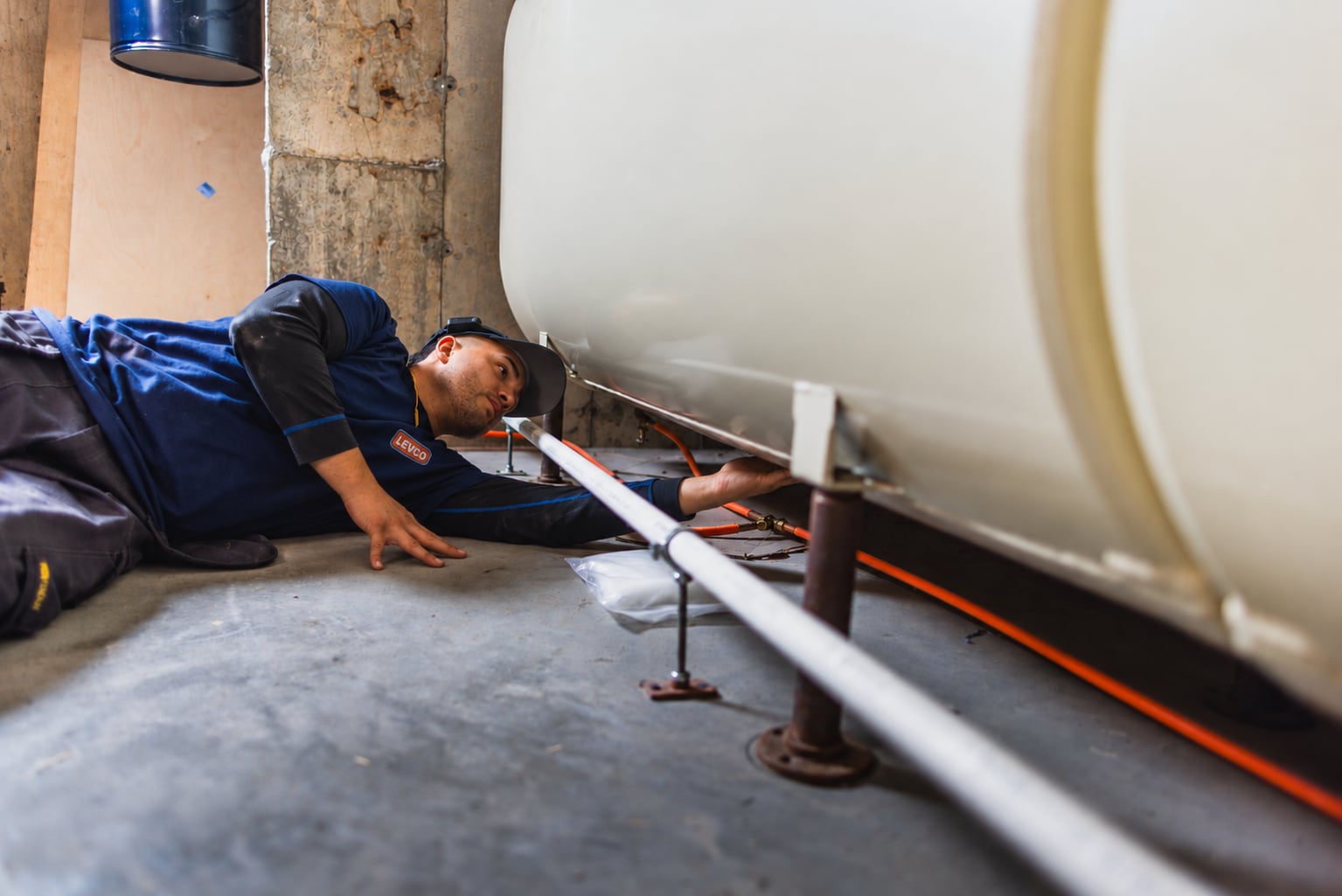
Every home’s tank setup is a little different. While 275-gallon tanks are common in Connecticut, some homes have a single tank while others use two or more connected tanks to provide the storage capacity their home and family need. The right setup depends on fuel usage, the equipment being served, available space, delivery access, and how much fuel the home needs to comfortably carry between deliveries.
Levco starts by understanding your existing setup and how your home uses fuel. In many cases, photos and a few key details are enough for our Comfort Advisors to prepare options and pricing. If the project calls for a closer look, or you’d simply prefer one, we’ll schedule a site visit before moving forward.
Common residential heating oil tank sizes
A simple starting point before a Comfort Advisor reviews the home and equipment.
| Tank size | Often considered for | What to keep in mind |
|---|---|---|
| 275 gallon, vertical | Many residential heating systems | Common basement choice with a smaller floor footprint |
| 275 gallon, horizontal | Homes with limited ceiling height | Uses more floor space than a vertical tank |
| 330 gallon | Homes that need more capacity than a 275 | Space and access must support the larger tank |
| Two 275-gallon tanks | Higher fuel use or added storage capacity | Requires room for both tanks and connected piping |
| Other residential sizes | Properties with unusual space or usage needs | Availability and fit are reviewed for the specific job |
The number in a tank name describes its nominal capacity. Actual delivery volume and usable fuel vary with the tank, piping, gauge reading, and operating conditions.
How we recommend an oil tank size
We look at the complete heating setup rather than square footage alone.
A Comfort Advisor will consider:
- The home's fuel-use history and the equipment supplied by the tank
- Whether the boiler also produces domestic hot water
- Indoor space, ceiling height, doors, stairs, and working clearances
- Fill and vent locations, fuel-line condition, and delivery access
- The condition of the existing tank and any future heating plans
Capacity is only one part of the decision
Single-wall and double-wall oil tanks
Both are established residential choices, with different shapes and containment designs.
Single-wall steel
The traditional residential oil tank uses one steel shell. These tanks are available in familiar vertical and horizontal forms and must be installed where their condition can be checked over time.
Double-wall
Double-wall tanks add a second layer of containment around the inner tank. Their shape, material, warranty terms, and space requirements vary by manufacturer, so the written quote should identify the specific option being proposed.
Check the requirements that apply to your home
Why an indoor oil tank is the better choice
Protection from harsh weather supports inspection, service, and tank life.
A basement or utility-room tank is protected from rain, snow, temperature swings, and other harsh weather. That protection helps limit exterior corrosion and means an indoor tank will typically last longer than a comparable tank exposed outdoors.
Indoor placement also keeps the tank accessible for routine inspection and service. The room, doorways, stairs, tank base, burner clearance, and fill and vent piping all shape the plan, so we use photos to review the complete path and proposed location.
Legacy underground tanks
An existing underground oil tank needs professional assessment. The next step depends on its condition, documentation, property plans, and the Connecticut requirements that apply to closure or removal.
Permits and Connecticut requirements
Oil tank work must follow the requirements that apply to the installation and the town. We review the job, coordinate the permits and inspections included in our scope, and explains any work that needs another qualified party.
Source: NFPA 31 — Installation requirements for oil-burning equipment and supply tanks.
Condition matters more than a simple age rule
Tank age is useful context, but it cannot replace an inspection.
Tank construction, moisture, the installation environment, maintenance history, and corrosion all affect service life. An older tank deserves attention, but a newer tank with visible damage also needs prompt review.
Signs to have checked
- Rust, pitting, flaking, or damp-looking areas on the tank
- Oil staining, drips, or a persistent oil odor
- Corrosion around fittings, seams, legs, or the tank bottom
- An unstable base, leaning tank, or damaged support legs
- Recurring filter or fuel-quality concerns noted during service
If you see oil or smell a persistent oil odor
About the tank gauge
A float gauge gives an approximate level, not an exact gallon count. Automatic delivery uses the home's delivery and usage history to help plan future deliveries, so customers do not have to build their own schedule around a gauge reading.
What happens when a tank needs to be replaced
Levco connects the assessment, written options, installation, and fuel delivery.
- Talk through the concern. A Comfort Advisor learns what prompted the call and reviews the home's heating and fuel needs.
- Review the existing setup through photos. Our process and experience usually let us prepare written options without an initial visit. Levco arranges a site visit only when measurements, access, condition, or placement require one, or when you request one.
- Compare written options. The quote reflects the tank, access, removal, piping, permits, and related work involved in the proposed setup.
- Complete the approved work. We coordinate the tank installation, applicable safety checks, permits, inspections, and fuel transfer or delivery included in the job.
- Keep care connected. Levco shows you the new setup and coordinates ongoing fuel delivery and preventative maintenance around the home's needs.
Ready to discuss your tank? Request an oil tank quote, or review the dedicated oil tank replacement page.
Common questions
- What size heating oil tank do I need?
- There isn’t one right size for every home. The right capacity depends on your fuel usage, the equipment the tank serves, available space, delivery access, and the existing setup. A 275-gallon tank is common, but we look at the whole home before recommending an option.
- Can my home have more than one oil tank?
- Yes. Some homes use a single tank, while others have two or more connected tanks to provide additional storage capacity. The right configuration depends on how much fuel your home uses, the available space, and how frequently deliveries should be needed.
- What is the difference between vertical and horizontal 275-gallon tanks?
- They have similar nominal capacity but different dimensions. Vertical tanks generally use less floor space, while horizontal tanks can work better where ceiling height or other space constraints matter. Access, clearances, and the existing piping also help determine the best fit.
- Should I choose a single-wall or double-wall oil tank?
- Both can be appropriate depending on the installation. A double-wall tank provides an additional layer of containment, while tank shape, available space, installation requirements, and other property considerations may influence the best choice. We’ll explain the options for your specific home.
- Why are heating oil tanks often installed indoors?
- An indoor tank is protected from rain, snow, temperature swings, and other outdoor conditions. It can also be easier to access for routine observation. The right location ultimately depends on the home, available space, access, and applicable installation requirements.
- How do I know if my oil tank needs attention?
- Visible corrosion, pitting, wet spots, staining, unstable legs, damaged fittings, or a persistent oil odor are all reasons to have the tank evaluated. Age is important, but condition, environment, construction, and installation history matter too.
- When should an oil tank be replaced?
- There isn’t a single replacement age that applies to every tank. We look at the tank’s age, condition, construction, environment, and signs of deterioration to help determine whether continued use or replacement makes sense.
- What affects the cost of replacing an oil tank?
- Tank type and size, access, the existing piping and fill setup, remaining fuel, removal of the old tank, permits, and site conditions can all affect the project. Levco reviews the setup first and provides written options and pricing before work begins.
Plan the right heating oil tank for your home.
Talk with a Levco Comfort Advisor about your current setup, tank size, construction, placement, or replacement options.
Your next step starts here.
Heating Oil Delivery
See how Levco keeps your home supplied with dependable automatic delivery, flexible pricing options, and local support.
Explore Heating Oil DeliveryOil Tank Replacement
Warning signs, tank options, and what shapes the written estimate.
Learn moreAutomatic Oil Delivery
We track your usage and schedule the fill, so you don't have to.
Learn moreRequest a Free Quote
Tell us what you’re considering. We’ll help you understand your options and provide clear pricing with no pressure or obligation.
Request a QuotePropane Delivery
Learn about reliable propane delivery and service for heating, hot water, cooking, generators, and more.
Explore Propane DeliveryHeating Service
Get expert repair, maintenance, and replacement support for your home’s heating system.
Explore Heating Service